


 +44 (0)1455 848 411


Beauty, Lies, and Breakdown: The Look of Bad Influencer
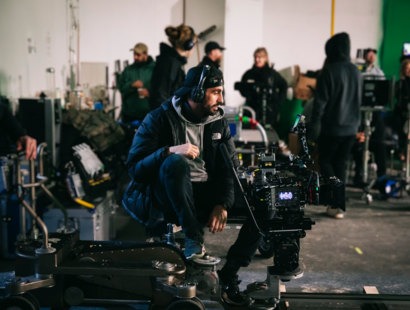
Netflix’s Bad Influencer is a crime drama that thrives on contrast. On one side: the glossy, hyper-curated world of influencers, luxury branding, and online fame. On the other: a shadowy underworld built on risk, survival, and counterfeit luxury handbags.
At the centre of its visual identity is cinematographer Rick Joaquim SASC, whose work spans award-winning features, documentaries, and commercial campaigns, with films screening at prestigious festivals including Sundance Film Festival and Cannes Film Festival. Recognised for his ability to create emotionally resonant imagery that remains deeply rooted in character, Rick brings a distinctive visual sensibility to every project. Rather than pursuing technical perfection, his work embraces texture, imperfection, and atmosphere, qualities that proved essential in shaping the dual identity of Bad Influencer, where glamour and danger exist side by side.
For Rick, this project wasn’t just about capturing two worlds, it was about letting them collide.
Two Worlds, One Frame
From the start, the creative challenge was clear: how do you shoot beauty and brutality in the same visual language without one cancelling out the other?
“One side is all control, curated feeds, beauty lighting, polished surfaces,” Rick explains. “The other is chaos. Crime, pressure, things slipping out of control. We wanted the camera to move between those worlds constantly, sometimes even within the same scene.”
So the show doesn’t just cut between glamour and grit, it blends them. A flawless influencer post can dissolve into a tense exchange over counterfeit goods. A luxury handbag isn’t just a prop; it’s currency, risk, and leverage. The result is a world that feels seductive… but never safe.
Why TLS Canon FD?
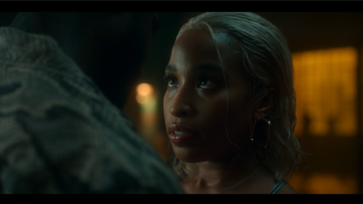
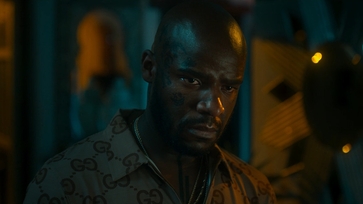
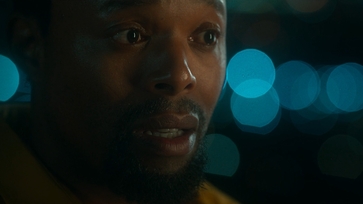
To build that texture, Rick turned to TLS-rehoused Canon FD lenses paired with the Sony Venice 2. He had long been inspired by Canon K35s, and the FDs offered something in the same universe, but with their own personality: onion-ring bokeh, gentle fall-off, and a kind of organic imperfection that digital glass often removes.
“I don’t want lenses to feel perfect,” he says. “Perfect can be boring at times. I want emotion in the image.”
The Venice 2 brought pristine resolution. The FDs broke it open a little, adding softness, texture, and unpredictability. That tension between clinical sharpness and organic imperfection became the sweet spot of the show’s look. And practically, it mattered too. The lens set gave the production flexibility across a demanding two-camera Netflix shoot, without blowing the budget or limiting coverage.
Vintage Glass, Without the Chaos
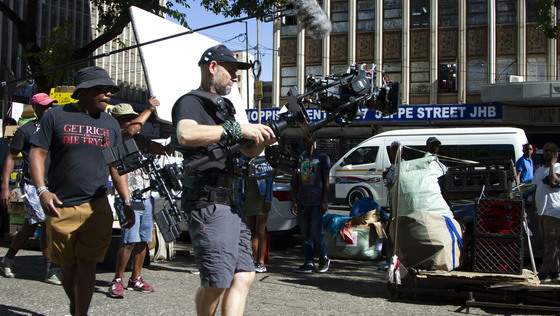
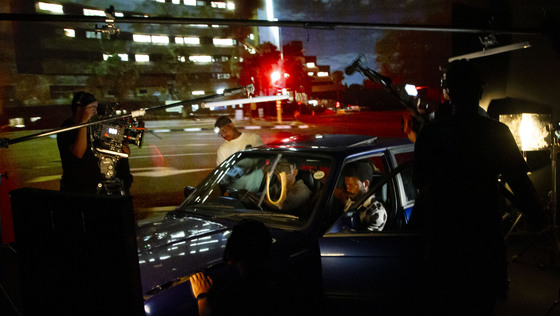
Vintage lenses are beautiful , but on set, they can be a headache. The TLS rehousing changed that completely. Suddenly everything lined up. Same front diameter. Consistent gears. Faster swaps. Less fighting with matte boxes. More shooting, less adjusting.
“It sounds small,” Rick notes, “but those minutes you save all day? They become scenes you wouldn’t have had time for otherwise.” There’s also the durability factor, protecting rare optics while making them production-ready. And then there’s the feel of them. The upgraded iris design helped maintain a rounder, more consistent bokeh, a subtle but important shift that quietly smooths out the image.
Imperfection as Storytelling
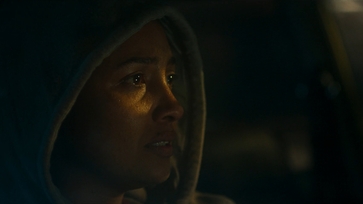
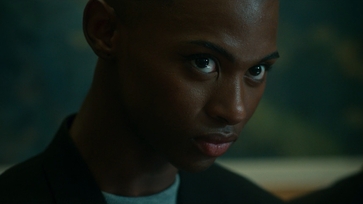
The real magic of the FD lenses wasn’t sharpness, it was their flaws. Flares that feel slightly unpredictable. Fall-off that doesn’t behave. A softness that appears just when things get emotionally unstable. Paired with the Venice 2’s full-frame sensor, characters can be isolated in almost dreamlike ways, then pulled straight back into something raw and unsteady. As the story escalates, the camera doesn’t stay neutral.
“At times we let things drift a bit,” Rick says. “Focus, exposure, sharpness, not breaking anything, just letting it breathe more. The characters are losing control, so the image follows them there.” It becomes less about perfection and more about feeling.
The Hero Lens
Every lens package has its anchor. Here, it was the Canon FD 55mm. It became the emotional default, close enough to feel intimate, wide enough to stay grounded in space. Natural. Human. Unforced. Alongside it, the 35mm, 28mm, and 20mm handled everyday coverage, while the 14mm was reserved for moments that needed distortion, social media feeds, CCTV angles, or psychological intensity. A compact FX3 also stepped in for tighter, more flexible setups when needed, quietly expanding the visual toolkit.
Letting the Image Fray at the Edges
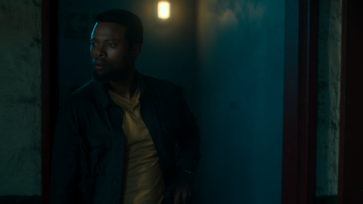
Some of the most powerful visual decisions weren’t about gear, they were about restraint. Shooting at around T2. Letting focus drift in emotionally charged moments. Not over-correcting when the image started to feel slightly fragile. Because that fragility mirrored the characters themselves. “As things spiral, we didn’t want the camera to stay polished,” Rick explains. “We wanted it to feel like it’s slightly slipping too.”
Why Lenses Matter More Than Ever
In a world where so many productions are shot on the same cameras, lenses become the fingerprint. “They’re where personality lives,” Rick says. “That’s where you can actually shape how a story feels.”
For Bad Influencer, the TLS Canon FD lenses didn’t just support the look, they helped define it. And the result speaks for itself: after release, the series reached #1 in South Africa and #3 on Netflix globally, reflecting how strongly it resonated with audiences across markets. More importantly, it left behind a visual identity that feels unmistakably its own, glossy, unstable, beautiful, and just slightly dangerous.
The kind of world you don’t just watch… you feel.
Discover More
You can find out more about Rick Joaquim, SASC on his website (https://www.rickjoaquim.com/) or instagram page: @rickjoaquim
Discover how a TLS rehousing can unlock the full creative potential of your vintage lenses. Contact us on +44 (0) 1455 848 411 or Sales@truelens.co.uk